


How Are Excess Fats Used? Breast and Face Shaping with Fat Transfer
Excess fat tissues in the body not only create regional aesthetic problems but also serve as a highly valuable biological material for rejuvenation and volume enhancement. Thanks to advanced surgical techniques today, fat cells taken from specific areas of the body can be processed and safely transferred to the face, breasts, and various other body regions. This procedure not only shapes the area but also improves skin quality, restores the natural contours of the face or breasts, and offers long-lasting, biologically compatible, and natural results compared to fillers. Fat transfer is a volumizing technique performed using the patient’s own tissue. Therefore, there is no risk of allergy, it is compatible with the body, and it does not create an artificial filler feeling. By using the unused fat in a controlled manner, both body contour is improved and natural volume is added to areas that need fullness. This approach is particularly prominent for patients seeking a more natural and smoothly transitioning aesthetic.
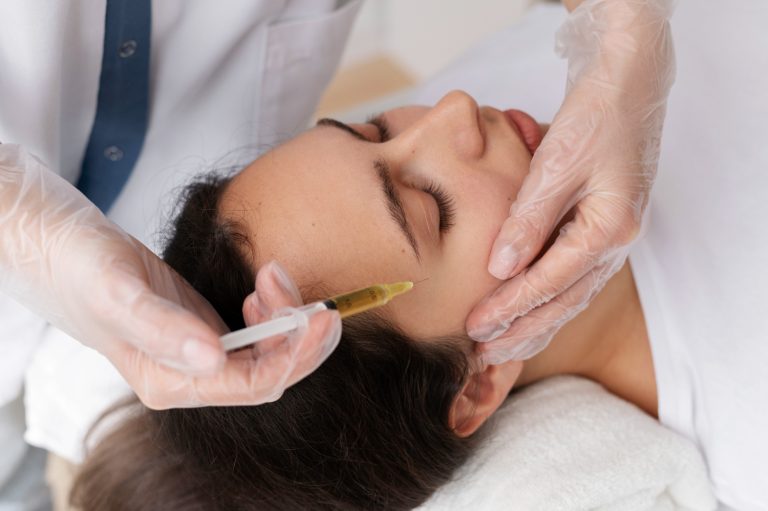
How Is Fat Transfer Performed?
The procedure usually begins with liposuction. Fat is taken from areas such as the abdomen, waist, hips, or thighs using fine techniques. The extracted fat is purified using special methods; only healthy and viable fat cells are used. Then, these cells are placed into the target area using a microinjection technique.
The goal of this procedure is not only to add volume; fat cells also support tissue rejuvenation and improvement of skin quality thanks to the stem cell properties they contain.
The transferred fat continues to live by integrating with the vascular structure in the area where it is placed — therefore, it provides permanent results. Some absorption in the first month is normal, but long-term success is achieved in procedures performed with the correct technique.
Fat Transfer in Breast Shaping
Fat transfer in the breast area is particularly effective for patients who want a natural enlargement or aim to achieve a smooth transition after implants. It is possible to obtain a fuller breast shape without using a breast implant; in patients who prefer implants, a combination can be performed to soften edge transitions and strengthen natural tissue.
This method:
- Provides a natural and soft tissue feel
- Adds more elegant fullness to the décolletage area
- Is effective in correcting asymmetry
- Can be used to correct traumatic scars or shape loss
The goal is to create a natural breast aesthetic and support the tissues.
Fat Transfer in Facial Shaping
The fat tissue in the face decreases over the years, causing a tired and sunken appearance. Fat transfer provides natural volume, especially in the under-eye area, cheeks, temples, and jawline.
This procedure is not performed to “inflate” the face; it is done to restore its former fullness and youthful light reflections.
The most commonly treated areas:
- Under-eye hollows and tear trough line
- Midface – cheek support
- Marionette and nasolabial folds
- Chin tip and jawline transition
Improvement in skin quality is also a significant benefit; the face appears fresher, more vibrant, and well-rested.
Advantages of Fat Transfer
- Biologically compatible and reliable
- Natural tissue feel
- Longer-lasting results compared to fillers
- Improves skin quality
- Shaping use of excess fat tissue
Fat transfer can be performed alone or combined with procedures such as facelift, liposuction, rhinoplasty, and breast surgeries for more powerful results.
Recovery and Results
Mild swelling and edema are normal after the procedure. Noticeable relief is achieved in the first week, and tissues stabilize within 2–3 months. With proper planning and technique, the majority of fat cells remain permanent, and the results last for years.
Natural appearance and tissue harmony are the greatest advantages of fat transfer.
Conclusion
Mild swelling and edema are normal after the procedure. Noticeable relief occurs within the first week, and tissues stabilize within 2–3 months. With proper planning and technique, the majority of fat cells remain permanent, and the results last for years.
Natural appearance and tissue harmony are the greatest advantages of fat transfer.


